Why Process Mapping Matters More Than You Think
— and Why Most Businesses Still Get It Wrong
If you put five people into a room and ask them to carry out the same task, you won’t get one process.
You’ll get five different versions of it.
Not because anyone is doing it badly, but because without documentation each person naturally invents their own method. They rely on memory, habit, preference, or whatever worked the last time. In UNBLOCK, this is exactly what keeps organisations trapped in problematic cultures: work happens, but it happens differently every time, and nobody realises how much value is leaking out of the system.
Before we can improve a process, we must be able to see it. And before we can see it, we must be clear on the language we use.
Process, Procedure, Tools: Getting Our Terms Straight
Most organisations treat all three as the same thing, which causes confusion before they even begin.
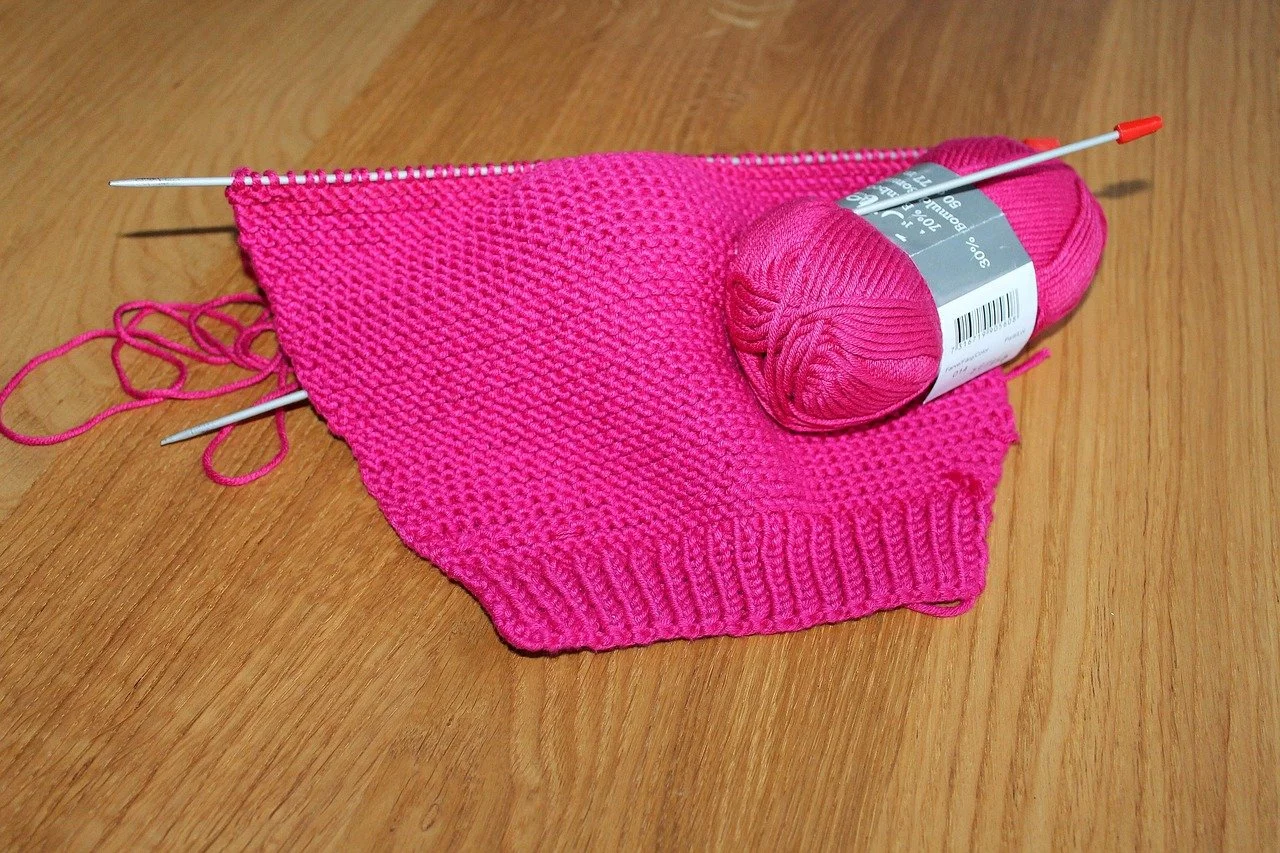
Process – the high-level journey
Think of knitting a cardigan. At process level, we don’t worry about stitches, techniques, or exact measurements. We outline the sequence:
Knit the left front
Knit the right front
Knit the back
Knit two sleeves
Sew them together
Attach the buttons
It’s the map of the terrain, not the detail of how to walk it.
Procedure – the detailed “how-to” of each step
If the process says “knit the left front”, the procedure explains how:
Cast on 100 stitches
Knit 200 rows
Shape the armhole
Cast off the shoulder
Procedures change more often than processes because they capture technique and method.
Tools – the enablers
Tools help you execute the procedure.
Knitting needles
Wool
A pattern
Or perhaps a computer-controlled machine
Tools evolve fastest. They can change a procedure and sometimes transform the process itself. A sophisticated electronic knitting machine might knit the front, back, and side seams in one go, eliminating steps entirely. In business terms: changing your CRM won’t fix a broken process; it will simply accelerate whatever is already happening, including the inefficiencies.
Why Documentation Matters: Culture, Consistency and Capacity
Documented processes are the bridge between the implicit and the explicit. Without that bridge:
People improvise
Knowledge lives in heads
Errors repeat
Improvement is impossible
In systematic and automatic cultures (UNBLOCK), documentation isn’t bureaucracy. It’s clarity, consistency, and capacity-building. It lets a business scale without relying on heroic effort or tribal (tacit) memory. And crucially:
If there is no documentation, there is no process, only a collection of habits.
Three Common Pitfalls When Organisations Try to Map Processes
1. Too many voices in the room
Inclusivity is good. And put ten people into a mapping session and you’ll get ten conflicting versions of reality. Debate expands. Pace slows. Decisions stall. Productive mapping works best with:
The person who owns the process
The person who does the process
The person who receives the output of the process
Everyone else can review, and they shouldn’t design.
2. Dropping into procedures too early
Teams naturally get lost in the detail:
“Before we send the invoice, we… well, it depends…”
“Sometimes I double-check the spreadsheet…”
“If the customer is X we do Y…”
Detail has its place - later. Until the process is clear, the procedure is noise.
3. Only mapping the “perfect world” path
Most organisations map what they want to happen. Not what actually happens. They forget:
Exceptions
Failure cases
Delays
Rework
Escalations
Yet these are the very things that drive cost, delay and customer frustration. The real productivity gains sit where the process breaks, not where it flows.
How to Draw a Useful Process Map
A good process map is clear, simple and designed for humans.
Start and End Points
Before you begin, define:
What triggers the process?
What counts as “done”?
Without this, maps sprawl endlessly and never resolve.
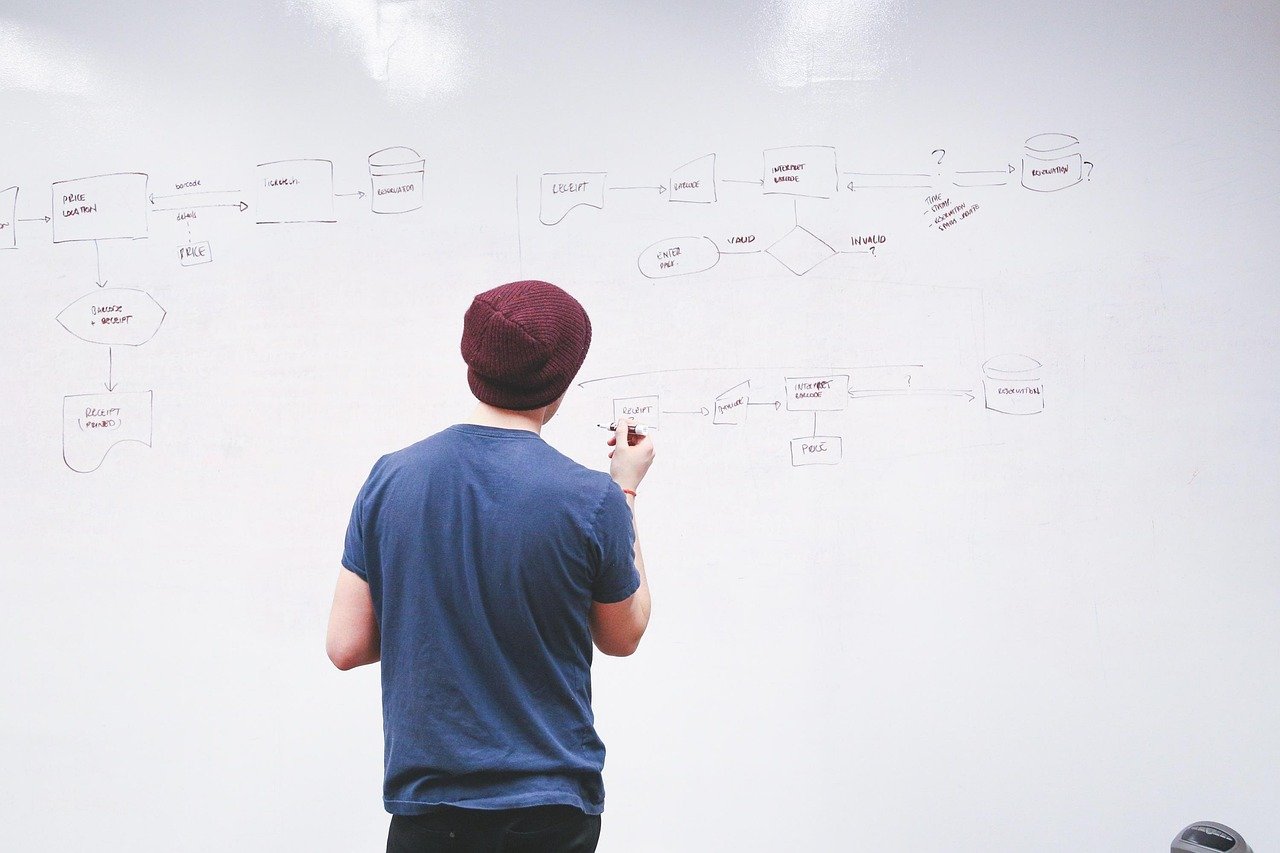
Key Components
Rectangles = steps
A single action written simply, e.g., Generate invoice, Approve purchase order.
Diamonds = decisions
Decisions should ideally be binary: Yes/No.
If your diamond needs more than two outputs, you may have a procedure confusion hiding inside a process step.
Arrows = flow
Keep them clean. Crossing lines are a visual warning of complexity.
Lots of handoffs imply friction, cost and waiting.
Connectors
Useful when maps grow large; they stop spaghetti diagrams and keep the logic traceable.
Swimlanes
Perhaps the most powerful tool of all. Each swimlane represents a role, department or system. Once you draw them, inefficiencies jump off the page:
Repeated handoffs
Responsibility gaps
Processes that ask one role to “do everything”
Steps where nobody is accountable
A process with too many swimlane jumps is like a cardigan with too many loose threads; fragile, slow and prone to unravelling.
From Mapping to Improving: The Real Goal
Mapping is not documentation for documentation’s sake. It is the foundation for moving from a problematic culture to a systematic one, where the work becomes predictable, repeatable and improvable. Once a process is visible, you can:
Identify unnecessary steps
Remove duplicate work
Clarify handoffs
Automate intelligently
Train consistently
Measure OIR (Order Integrity Ratio) and other flow metrics
Raise productivity without adding people
In UNBLOCK, the shift to systematic culture is where organisations first see real productivity gains: fewer errors, fewer surprises, faster throughput, happier customers.
The Bottom Line
If five people are running a process, they will do it five different ways, unless you define the process, refine the procedure, and equip them with the right tools. Documenting a process is how you:
Turn tacit knowledge into organisational capability
Reveal the hidden friction you’re currently tolerating
Create stability before adding automation or technology
Build capacity without expanding headcount
Make productivity a behaviour, not an aspiration
Process mapping isn’t just an operational exercise. It’s a cultural one.
It’s how organisations replace lethargy with clarity, and unlock the productivity that’s already sitting inside the business.
If you’re looking to boost productivity in your own organisation, I run tailored workshops for senior leadership teams on Improving Productivity - Combatting Lethargy (Through Process) . Get in touch to explore how we could work together.