


Welcome to Amanda’s semi-regular blog, where she writes about how to improve business profitability

Why are we so afraid of difference?
I recently engaged in the services of a virtual assistant. I had two really great candidates to choose from in the final lineup, and quite honestly could have engaged either one of them. In order to make a decision, I decided to pick the one that was least like me. Whilst it’s often tempting to recruit people like us, from a business and productivity point of view, recruiting for difference is often the smarter move.

Have you outgrown your current software?
If software had a sell-by date I’m sure that UK productivity would be far higher than it has been since 2008.

We’re rubbish at defining problems
Most of us are pretty rubbish at defining problems. We spend so much time in our heads ruminating the problem we shut down our ability to think expansively about it.

2/3 of your forecast is generally missing
Trying to run a business with just a revenue and expenditure forecast, is like trying to do a jigsaw with only a 1/3 of the pieces.


Spreadsheets are not a panacea
My husband thinks that Excel can be used for anything, from planning a project to producing a technical drawing – yes really!


Is SpreadsheetAccuracyTheory a thing?
My family jokes that my ideal Xmas present is a spreadsheet containing errors that I have to find.


The grass isn’t always greener
When you’re stuck in the 9-5 grind of a day job, particularly one where your time is charged by the hour, it can seem very appealing to jack it in and become self-employed. That feeling that you could be working for yourself is alluring – you could charge less, and still be better off.
I wonder how many people in this situation have read The eMyth Revisited by Michael E Gerber? If they have, they might be more cautious about taking the plunge to self-employment or a freelance lifestyle.

Stuck prices requires a leap
Many years ago, I ran a software development house. I and a team of 4 other developers wrote and supported bespoke software for a range of clients. We were writing what would now be called an ERP system, without the finance bit.
Around the time my second son was born, over 12 years ago, the company finances were in dire straits.

What’s your pricing strategy?
Peter Cook, CEO of Thought Leaders Business School say that “we are all dysfunctional about money.” I think this is worth bearing in mind when it comes to working out pricing.

Managing Cashflow Requires Purposeful Pacesetting
Companies with a traumatic productivity culture must focus on cash flow. Rather like a marathon runner has a pacesetter to do a put in a good time, when trauma strikes, a business needs its own pacesetter to measure the pace of cash flow collection, because without cash, as we all know, a business will fail.

Going the extra mile
Some years ago I found myself on a project in crisis. If it could go wrong, it had. If we accept my premise, that the productivity culture of an organization lies at the intersection of people, process and price, this organization was in trauma.

When organisations lose their way
When we think about the promise, the commitments an organization makes to its customers, the very essence of for what it stands, it is hard to imagine a situation where nobody knows what this is.

Promise and expectation alignment
Every organisation, whether a membership organisation, a food manufacturer or a professional services firm, creates in its clients an expectation. It does this through the expression of its promise. This expectation may be written and specific, or unwritten and implied.

What motivates me, doesn't motivate you
I was recently asked what motivates me, and what are the drivers I see that motivate others. It was a real gem of a question (thank you!) and has caused me to reflect further.
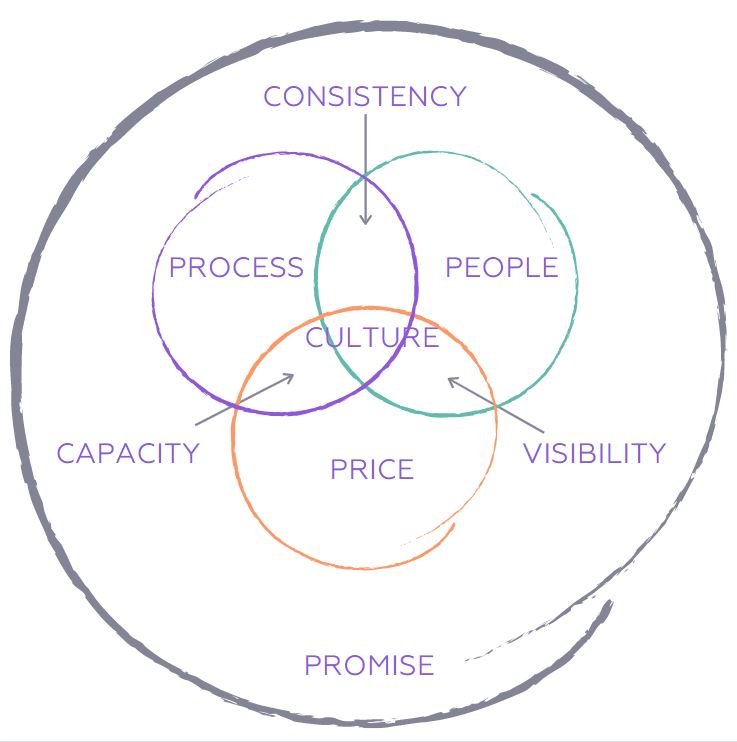
To overcome lethargy focus on promise
Improving productivity requires us to change what we are doing, and do things differently. As humans we resist change. We often like the idea, provided it doesn’t affect us.